The Feature Wall Is Not a Room Plan
A feature wall can add emphasis, but a room plan works better when furniture, circulation, sightlines, and focal points support how people use the space.
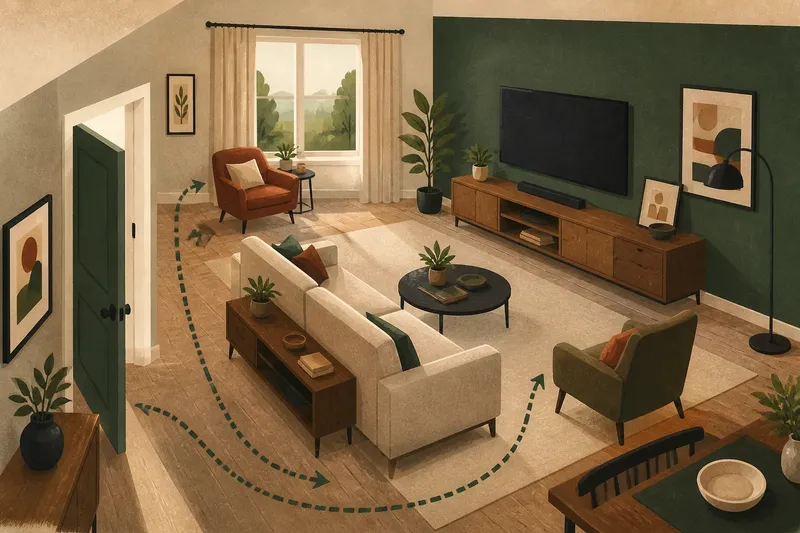
A feature wall can make a blank room feel more deliberate, but it cannot fix a sofa that blocks the doorway or a dining chair that has nowhere to move. The useful question is not which wall deserves a bold color; it is how the room’s paths, furniture, and focal points work together. Decoration can clarify a plan, but it cannot substitute for one.
What does a feature wall actually do?
A feature wall is a surface given extra visual emphasis through paint, wallpaper, tile, shelving, or another finish. Its job is to attract attention and help a viewer read the room. It might mark the wall behind a bed, give a dining nook a distinct identity, or make a fireplace easier to notice.
That is a perceptual job, not a spatial one. A saturated color can make a wall feel prominent; a patterned paper can make it seem busier or more intimate. Neither changes the position of the door, creates a place to set a drink, or gives people a clear route across the room.
Keeping those roles separate makes decorating decisions easier. Start by asking what needs to happen in the room: reading, conversation, eating, working, or some combination. Then decide whether a highlighted surface helps people understand where those activities belong.
Why should the plan come before the wall?
A room plan describes where furniture sits and how people move around it. Circulation is the usable path through a space, including the route between an entrance and the places people need to reach. A plan that ignores circulation can look polished in a photograph and feel awkward every time someone carries a laundry basket through it.
Begin with fixed features: doors, windows, radiators, built-in cabinets, and outlets that affect where furniture can go. Notice which doors swing into the room and whether window coverings need room to open. These details constrain placement before color or pattern enters the discussion.
Next, identify the room’s main activities and the objects each one needs. A conversation area needs seats oriented toward one another, not merely lined up against the most dramatic wall. A desk needs a usable work surface and a chair that can pull back. A dining table needs space for people to sit and rise without turning the route through the room into an obstacle course.
Try the arrangement with existing furniture before committing to a wall treatment. Move a chair, mark a table’s footprint with painter’s tape, or sketch the room on graph paper. The aim is not a perfect technical drawing; it is to see whether the proposed arrangement supports the room’s ordinary use.
How do circulation and furniture affect the focal point?
A focal point is the place that first draws the eye or gives a group of objects visual order. It might be a fireplace, a large window, a television, a substantial artwork, or a view beyond the room. A feature wall can create a focal point, but it may compete with one that already exists.
Furniture helps establish which focal point matters. A sofa facing a television tells people where to look; chairs angled toward a fireplace suggest conversation. If those seats also face a strongly patterned wall, the room may offer several competing instructions. The result is not automatically wrong, but the visual hierarchy should match what people do there.
Circulation affects that hierarchy too. A clear route across the room can draw the eye toward a doorway or view, while a bulky cabinet placed in that path interrupts both movement and sightline. A sightline is what someone can see from a particular position. Consider what appears behind the sofa from the entrance, or what a seated person sees across the room. Those views often reveal more than a straight-on photograph of a decorated wall.
Imagine a narrow living room with a window at one end, a television on the long wall, and a door near the opposite corner. If a deep sofa is pushed toward the door to face a newly painted accent wall, the route from the entrance may pinch and the window may become visually secondary. Moving the sofa to preserve a clear passage and angling a chair toward the window could make the room easier to use; a quieter treatment behind the television would then support, rather than compete with, the room’s strongest views.
When does a feature wall help the room?
A highlighted wall is most useful when it reinforces an arrangement that already makes sense. It can distinguish a dining area in an open-plan room, give a bed a clear visual backdrop, or group a low cabinet and artwork into one composed zone. In each case, the surface helps people read an existing function rather than pretending to create one.
Scale and contrast matter. A small wall covered in a large, high-contrast pattern may pull attention away from a more important feature. A subdued paint color can still define a zone without dominating nearby rooms. Consider how the treatment will look from the main entrance, from the usual seat, and from adjacent spaces, not only when standing directly in front of it.
Materials also change the character of the emphasis. Matte paint tends to read differently from glossy tile; wallpaper adds pattern and edge detail; shelves bring objects, shadows, and visual clutter into the composition. Samples viewed beside the actual floor, upholstery, and trim can help reveal whether the wall belongs with the room’s existing palette. Follow product labels, manufacturer instructions, and local rules where a material’s use depends on them.
What questions help you judge a feature wall?
Which activity should this wall support?
Name the activity before choosing a finish: sleeping, dining, reading, or displaying art. If the wall treatment does not help define or support that activity, it may be decoration without a clear role.
What will people see from the entrance?
Stand at the doorway and notice the first view, including furniture edges and the route through the room. A strong wall treatment may be effective there, but it should not make the entrance feel visually blocked.
Does furniture still work when people use it?
Think beyond the furniture’s outline: a chair moves, a cabinet door opens, and someone sits down or stands up. If those actions collide with the route through the room, changing the finish will not solve the underlying conflict.
Is another focal point already doing the job?
Look for a fireplace, window, artwork, or television that already organizes attention. If a second focal point is needed, give it a distinct purpose; if not, a quieter wall can help the existing one remain legible.
How can you decide what to change first?
Work from the practical arrangement toward the visual finish. A useful order is:
- List the room’s main activities and the furniture each requires.
- Mark doors, windows, built-ins, and other fixed features on a sketch.
- Choose furniture positions that preserve useful routes and workable clearances.
- Check the main views from the entrance, common seats, and adjacent rooms.
- Identify the focal point that best serves the room’s primary activity.
- Choose whether a feature wall should strengthen that focal point, define a zone, or stay out of the way.
For instance, say you use a spare bedroom as both a guest room and a place to sew. If a bold wall behind the bed draws attention away from the sewing table and leaves its chair cramped, first adjust the table and bed positions so both activities have a workable place. Then use a calmer wall treatment near the bed, or reserve the strongest color for the sewing nook if it helps distinguish that zone.
When comparing arrangements, make one change at a time. A quick phone photo from the doorway can help you notice blocked views or an imbalance that is hard to see while moving around. The photo is a prompt for observation, not a substitute for sitting, walking, opening drawers, and using the room as intended.
What should the wall do after the plan works?
Once circulation and furniture feel coherent, the wall can contribute something specific: visual emphasis, a boundary between uses, or a backdrop that makes a valued object easier to see. It can also remain plain. An unaccented surface is not a missed opportunity if it lets a window, artwork, or gathering area hold attention.
The feature wall is not a room plan because it changes how a surface reads, not how the room operates. For a feature wall that earns its place, begin with furniture, routes, and sightlines, then choose a finish that supports the resulting arrangement. That sequence turns decoration into a clear decision rather than an attempt to make the wall solve everything.